Guide
A publisher asked for a sample chapter in 3 languages. What do I send?
Send one lettered chapter per language, the source chapter, a glossary of names and terms for each language, and a short note on the choices you made, such as honorifics and sound effects. Agree the chapter, the file format and the deadline in writing first. Have a native reader check each language before it goes out, because the sample is judged on its weakest language.
Table of contents
Multi-language launches are now normal for webtoons. On its earnings call of 9 November 2026, WEBTOON said its Global Drop title The Warrior's Ballad was released in 9 languages. So a partner who asks to see your series in 3 languages before a deal is asking a fair question. This page is for the rights holder, studio or localization team that has to answer it.
What goes in a sample pack?
| Item | What it is | Why the publisher wants it |
|---|---|---|
| Lettered chapter, one per language | The finished pages, exported at the size the publisher uses | This is what readers would see |
| Source chapter | The same chapter in the original language | Their editor compares the two |
| Glossary per language | Every name, place and fixed term with one approved form | Shows the next 100 chapters will match the first |
| Series bible or character sheet | Who each character is and how they talk | Shows voice is planned, not guessed |
| Lettering style sheet | Fonts with their licences, bold rules, sound effect policy | Their letterer can continue in the same style |
| Translator notes | One page per language: honorifics, jokes, sound effects, anything you changed and why | Shows the choices were deliberate |
| Credits | Who translated, lettered and reviewed each language | They need to know who they would be working with |
| Editable files, if asked | Layered files per page | Lets their team fix one line without starting again |
The templates for three of these exist already: the series bible template, the translation glossary template and the lettering style sheet template.
What should you agree before you start?
- Which chapter. Chapter 1 is the usual choice. If the publisher lets you pick, choose one that shows the hard parts too: several characters talking, and sound effects.
- Which languages, and which variant. Spanish for Spain or for Latin America, Portuguese for Brazil or Portugal, Chinese in simplified or traditional characters.
- Format and size. Pages or a vertical strip, the width in pixels, JPG or PNG, and the file size limit.
- Deadline. One date for all three languages.
- Paid or not, and who owns the sample. The rights checklist covers who owns a translation. If you are not the rights holder, get permission before you translate a page.
- What happens next. A sample is often step one of a licensing offer. Know what you will ask for if they say yes.
How do you schedule 3 languages at once?
- Write the source decisions once. Names, forms of address and terms in the source language, in one bible. Every language starts from it.
- Make a first pass in each language. By a translator per language, or by software with the glossary.
- Get one native reader per language. Each reader compares the text with the source, line by line. A reader who knows only the target language catches style, not meaning.
- Letter each language and check the fit. Translations change length, and short lines change most. The W3C cites IBM guidance that English text of up to 10 characters can grow by 200 to 300% in European languages. In its example, the German for "views" is 2.8 times as wide as the English, and the Korean 0.8 times. Small bubbles and sound effects need the most care.
- Run the same checks on all three. Use the lettering QA checklist and the publishing checklist.
- Send one pack with the three languages, the source and the notes, as one archive with clear file names.
What does a 3-language sample cost?
Two ways to make the first pass, for one chapter. The freelance figures use the averages from an Anime News Network survey of manga freelancers (13 November 2026): US$6 a page for translation and about US$3 a page for lettering. Those rates are from English manga releases. Other language pairs and webtoon episodes are priced differently. The totals are our arithmetic, and the review time is extra in both cases.
| Chapter | Freelance translation and lettering (survey averages) | Bublate first pass |
|---|---|---|
| Webtoon chapter, up to 20 segments, 1 language | Usually quoted per episode, not per page | $3 (10 credits) |
| Webtoon chapter, up to 20 segments, 3 languages | Usually quoted per episode, not per page | $9 (30 credits) |
| Webtoon chapter, 30 segments, 3 languages | Usually quoted per episode, not per page | $13.50 (45 credits) |
| Manga chapter, 20 pages, 1 language | 20 x ($6 + $3) = $180 | Up to $12 (up to $0.60 a page) |
| Manga chapter, 20 pages, 3 languages | $540 | Up to $36 |
New Bublate accounts get 30 free credits once, with no card. That covers a 20-segment webtoon sample in 3 languages. For other lengths, use the translation cost calculator. For rates per language pair, see what webtoon translation costs.
Where do you have to decide?
- Honorifics, per language. Keep, translate or drop. The answer can differ between languages. Write it in each language's notes.
- Sound effects. Redraw them in the target language, or keep the original with a small translation next to it.
- How you made it. If the publisher asks whether you used machine translation, tell them, and tell them who reviewed it. See platform rules on machine translation.
- Polish or speed. A sample is judged on its weakest page. Spend the review time there, not on the first page only.
What does Bublate do for a sample pack?
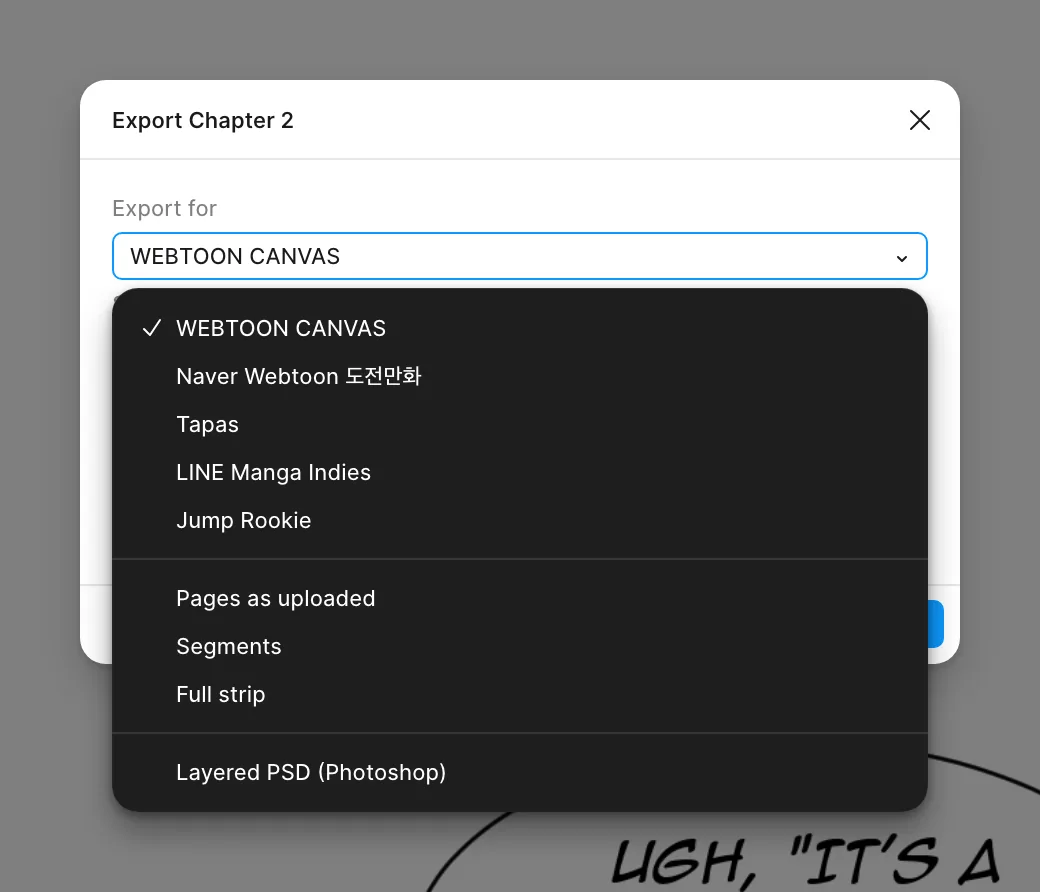
In Bublate each target language is a separate job on the same upload. Each language has its own series bible, which you can fill once from the series bible template and import. Bublate translates, cleans the source text, letters every bubble and redraws sound effects, then gives you a page editor to fix any line. Invite a native reader per language with the reviewer role: they can comment and flag, and the side by side view shows the source and the translation at the same scroll position. Export uses platform presets, or the pages as uploaded, and a layered PSD per page for the publisher's letterer.
Bublate does not supply the native readers, write the translator notes or decide the honorific policy. It translates only pages you upload and have the rights to, and it does not train on them. For catalogue pricing, invoices, team seats or a data processing agreement, see for publishers or contact sales.
Frequently asked questions
What should a translation sample chapter include?
The lettered chapter in each language, the source chapter, a glossary of names and terms per language, and a short note on your choices: honorifics, sound effects and anything you changed. If the publisher wants to edit, add layered files. Credit the translator, letterer and reviewer of each language.
Which chapter should I use as a sample?
Chapter 1, unless the publisher asks for another. It introduces the main characters and is what new readers see first. If you can pick, add or choose a chapter with several characters talking and some sound effects, because those parts show quality best.
How much does a sample chapter in 3 languages cost in Bublate?
A webtoon chapter of up to 20 segments costs $3 per target language, so $9 for 3 languages, or 30 credits. New accounts get 30 free credits once. Manga and other print pages cost up to $0.60 a page per language, so a 20-page chapter in 3 languages costs up to $36.
Should I tell a publisher that I used machine translation?
Yes, if they ask, and say who reviewed each language. Publishers judge the result, but they also need to know how you will make the next 100 chapters. A clear method with a named native reviewer per language is easier to trust than a sample with no explanation.