Korean to Swahili
Translate Korean manhwa into Swahili
Bublate translates Korean manhwa into Swahili and letters every page. 쾅 (kwang) becomes tifu. Each Swahili line is re-fitted to balloons drawn for Korean. Swahili text is 39% wider than Korean at one font size.
Swahili text is 39% wider than Korean at one font size. 와장창 (wajangchang) becomes kacha. A title like 선배 (seonbae) meets Swahili titles like mzee. A kin word like 형 (hyeong) can become mama. Bublate letters every Swahili balloon and redraws each Korean sound effect in the art, and a Swahili editor checks the result.
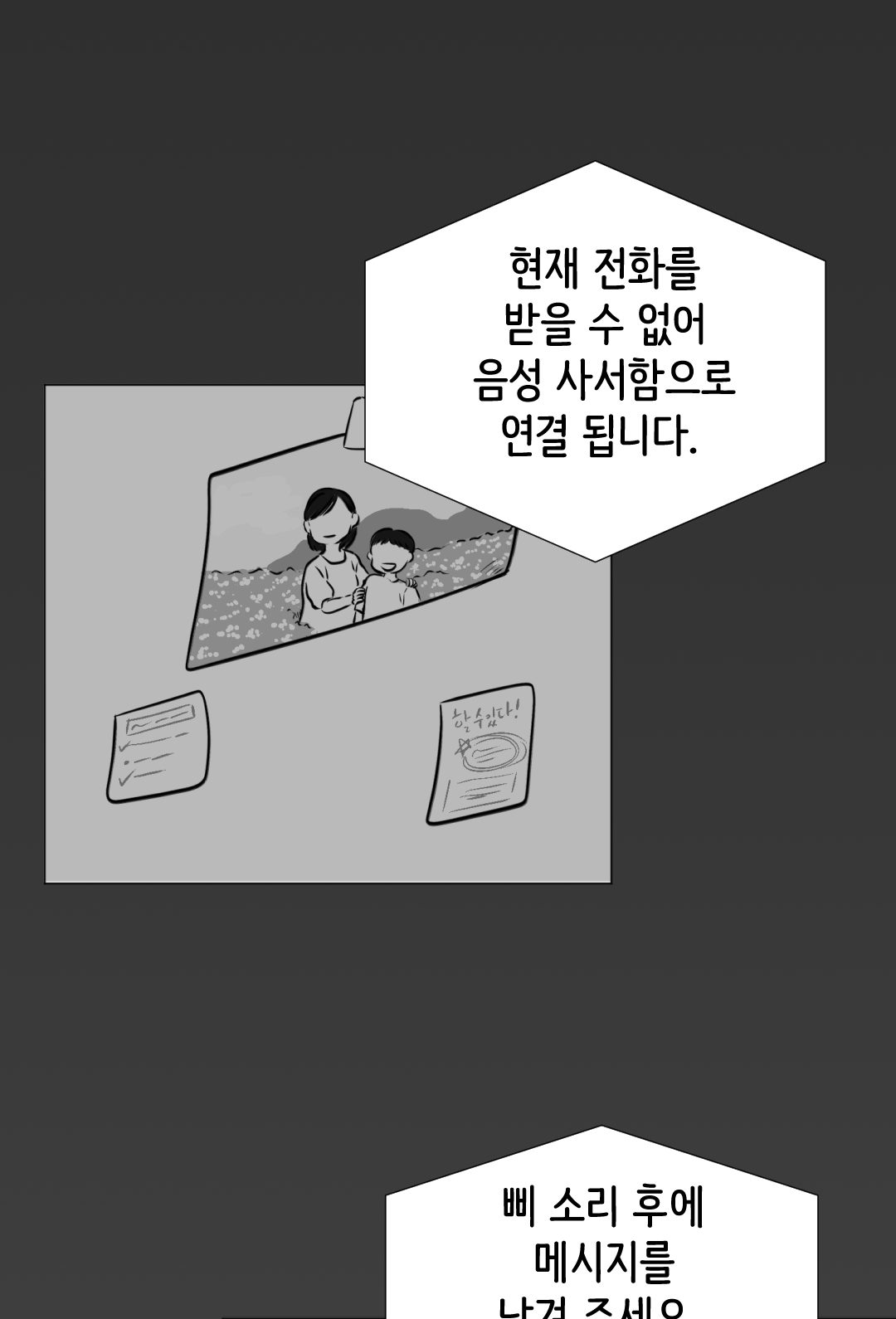
What changes from Korean to Swahili
Script, 39% more line width, capital letters and forms of address change from Korean to Swahili.
Hangul to Latin
Korean is written in the Hangul script and Swahili in the Latin script. Latin letters come in capital and small pairs. Korean can be set horizontally or vertically. Swahili has capital and small letters, which Korean does not.
39% longer lines
Swahili text is about 39% wider than the same Korean text at one font size (FLORES-200). It has 129% more characters. A Swahili line needs more room than the Korean line it replaces. Bublate fits each balloon by setting the Swahili text on more lines or at a smaller size, and you check the tight ones in the editor.
"You" and titles
In Korean, 씨 after a surname alone sounds rude. Put it after the full name or the given name. Swahili wewe is the singular "you" and ninyi the plural "you". Korean titles such as 선배 (seonbae) and 님 (nim) meet Swahili titles such as mzee and bwana. Kin words for friends: Korean 형 (hyeong) and 오빠 (oppa), Swahili mama and ndugu.
Korean comics for Swahili readers
Shujaaz started in Kenya in 2010 as free monthly comic books, written in Sheng, the slang of young Kenyans. Platforms in Swahili include Shujaaz.
Korean publishers deposited 5,941 new comic titles in 2024. 2,652 were translations, and 2,595 of them came from Japan. The Korean webtoon industry had revenue of 2,285.6 billion won in 2024, 4.4% more than in 2023. Korean comics come from Bomtoon and Naver Webtoon.
Swahili readers search for "manhwa recap", "manhwa webtoon" and "katuni zilizotafsiriwa kwa kiswahili" (Google autocomplete, 2026-11-22).
Side by side
| Korean | Swahili | |
|---|---|---|
| Script | Hangul | Latin |
| Capital letters | No | Yes |
| Line width against English (same size) | 78% | 109% |
| Characters against English | 46% | 106% |
| Titles | 선배 (seonbae), 님 (nim), 씨 (ssi) | mzee, bwana, bibi |
| Kin words used for friends | 형 (hyeong), 오빠 (oppa), 언니 (eonni) | mama, ndugu, kaka |
| Words for comics | 만화 (manhwa) | kibonzo |
| Words for comics | 웹툰 (webtun) | komiki |
| Heavy impact | 쾅 (kwang) | tifu, pu |
| Crash | 와장창 (wajangchang) | kacha |
| Laughter | 하하 (haha) | kwa kwa kwa |
| Splash | 풍덩 (pungdeong) | chubwi, tumbwi |
Korean sound effects in Swahili
4 sounds with a word on both sides.
쾅 to tifu
쾅 (kwang) becomes tifu (a heavy impact), 와장창 (wajangchang) becomes kacha (a crash), 하하 (haha) becomes kwa kwa kwa (laughter) and 풍덩 (pungdeong) becomes chubwi (a splash). The Standard Korean Dictionary lists sound words such as 쾅 and 멍멍 as adverbs. Swahili sound words are often repeated, as in Cheka kwa! kwa! kwa! for laughter.
Swahili punctuation
On the Korean side: Korean uses the ellipsis alone to show silence. A period then follows the ellipsis.
Page order and text direction
Korean manhwa in print read from left to right, like English books. Korean editions of Japanese manga keep the Japanese right to left order, a rule since the mid-1990s. A Swahili comics manual says comics read left to right, and the top row of panels comes first.

Lettering Swahili
A Swahili comics manual tells artists to draw guide lines, write the text in pencil, then draw the balloon around it with space to spare. A 2014 study sorts Korean webtoon balloon placement into four types. One type uses the vertical scroll itself. Korean has no upper and lower case. So a Korean balloon has no all-caps rule.
Bublate letters Swahili in its comic fonts and takes any letter they lack from a matching Latin font. See the Korean sound effect dictionary, honorifics in manhwa, Korean romanization converter, bubble font size calculator and how to letter comics.
Sources
- The Unicode Standard, chapter 7: Europe I (Latin, Vietnamese) · checked
- r12a, Korean orthography notes · checked
- FLORES-200 devtest, 1,012 sentences in 200 languages (NLLB Team, CC BY-SA 4.0), measured by Bublate · checked
- Wikipedia: Manhwa (reading direction) · checked
- 위키백과: 일본 만화 (Korean editions and binding) · checked
- Leif Packalén, Katti Ka-Batembo: Komiki, hadithi kwa njia ya michoro (World Comics Finland) · checked
- Wiktionary: 씨 (Korean, usage notes) · checked
- Wiktionary: wewe (Swahili) · checked
- Wiktionary: ninyi (Swahili) · checked
- 표준국어대사전: 선배 (先輩) · checked
- 표준국어대사전: -님 · checked
- Wiktionary: 님 (Korean) · checked
- Wiktionary: mzee (Swahili) · checked
- Wiktionary: bwana (Swahili) · checked
- Wiktionary: bibi (Swahili) · checked
- Wiktionary: 형 (Korean) · checked
- Wiktionary: 오빠 (Korean) · checked
- Wiktionary: 언니 (Korean) · checked
- Wiktionary: mama (Swahili) · checked
- Wiktionary: ndugu (Swahili) · checked
- Wiktionary: kaka (Swahili) · checked
- 표준국어대사전: 쾅 · checked
- Taifa Leo: Ukumbi wa lugha na fasihi, dhima na aina ya vielezi katika Kiswahili · checked
- Mhariri: Mifano ya tanakali za sauti (2023) · checked
- 표준국어대사전: 와장창 · checked
- 표준국어대사전: 하하 · checked
- 표준국어대사전: 풍덩 · checked
- Wiktionary: chubwi (Swahili) · checked
- 표준국어대사전: 의성어 · checked
- 표준국어대사전: 멍멍 · checked
- Unicode CLDR 49.0.0: delimiters and number symbols · checked
- 국립국어원: 한글 맞춤법 부록, 문장 부호 (2015) with commentary · checked
- 정규하, 윤기헌: 웹툰에 나타난 특징적 말칸 연출에 대한 분석, 만화애니메이션 연구 36 (2014) · checked
- W3C: Requirements for Hangul Text Layout and Typography (klreq) · checked
- Wikipedia: Shujaaz · checked
- 대한출판문화협회: 2024년 기준 한국 출판생산통계 (PDF) · checked
- 한국콘텐츠진흥원: 2025 웹툰산업 실태조사 (press release, 2025-12-29) · checked
- Shujaaz Inc · checked
- 봄툰 · checked
- 네이버웹툰 · checked
- 표준국어대사전: 만화 (漫畫) · checked
- Wiktionary: kibonzo (Swahili) · checked
- 표준국어대사전: 웹툰 · checked
Related
Learn more
Korean to Swedish
Translate Korean manhwa into Swedish: script, length, forms of address and sound effects compared.
Learn moreKorean to Tamil
Translate Korean manhwa into Tamil: script, length, forms of address and sound effects compared.
Learn more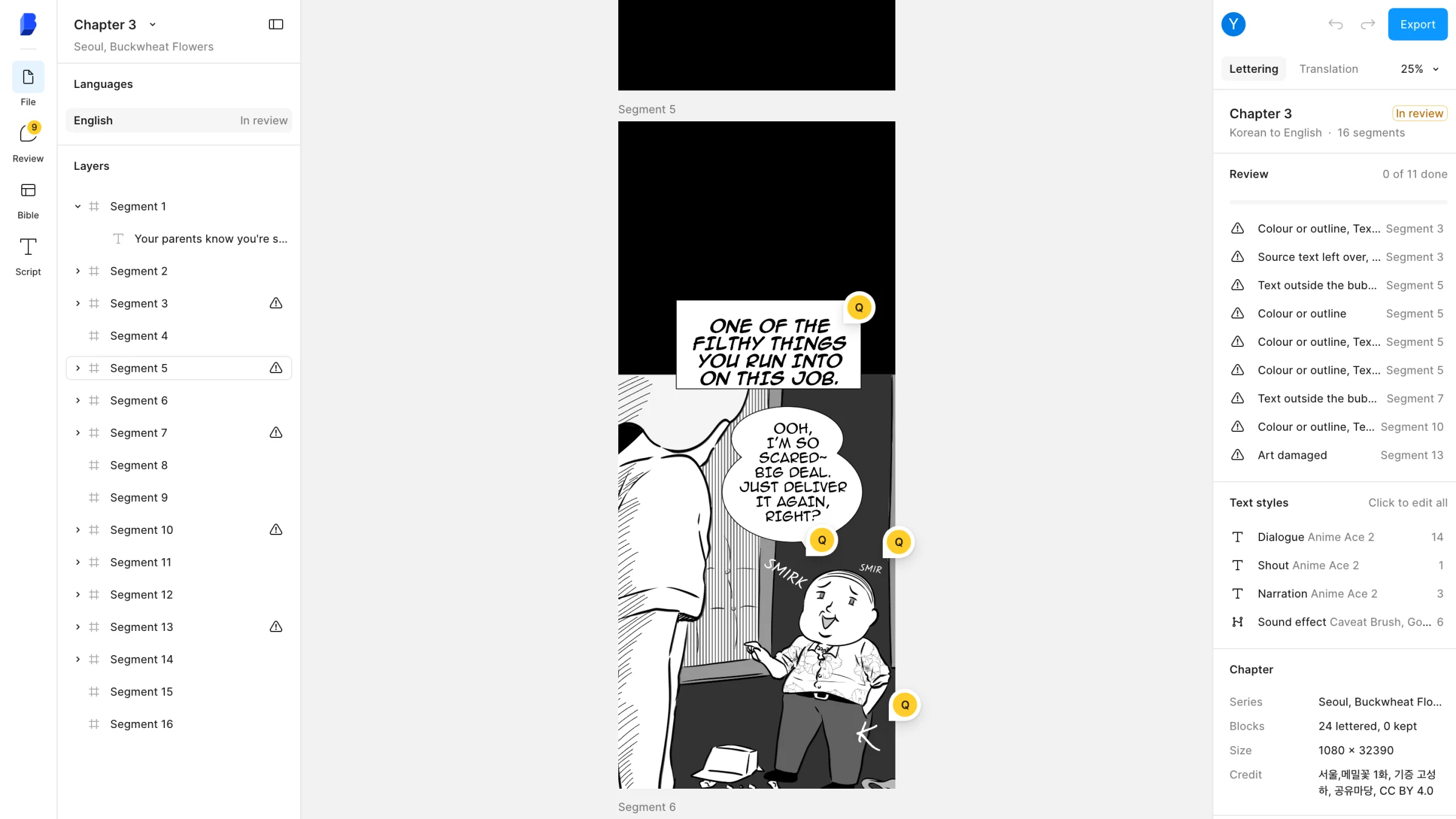
Japanese to Swahili
Translate Japanese manga into Swahili: script, length, forms of address and sound effects compared.
Learn moreQuestions
How do I translate Korean manhwa into Swahili?
Upload the Korean pages and pick Swahili. Bublate letters each balloon in Latin script, and 하하 (haha) becomes kwa kwa kwa, 풍덩 (pungdeong) becomes chubwi. A webtoon chapter costs $3, a manga page up to $0.60, with 30 free credits.
How are Korean forms of address handled in Swahili?
In Korean, 씨 after a surname alone sounds rude. Put it after the full name or the given name. Swahili wewe is the singular "you" and ninyi the plural "you". Korean titles such as 선배 (seonbae) and 님 (nim) meet Swahili titles such as mzee and bwana.
What happens to Korean sound effects in Swahili?
Each one gets a Swahili word for the same sound: 풍덩 (pungdeong) becomes chubwi (a splash). Swahili sound words are often repeated, as in Cheka kwa! kwa! kwa! for laughter.
Does Swahili text fit balloons drawn for Korean?
Swahili text is about 39% wider than the same Korean text at one font size (FLORES-200). It has 129% more characters. A Swahili line needs more room than the Korean line it replaces. Bublate fits each balloon by setting the Swahili text on more lines or at a smaller size, and you check the tight ones in the editor.